Loading the page. Nothing has gone wrong.

MSMU 461 5308
Last free day passed
Five free days used$275.00 / day
Advance short
$1,240.00
Short of the wire on file
Only the owner can release it.
Bay State Cartage
MC 738214
Held
Insurance expired. Dispatch paperwork will not generate.
The closed loop
Keyed once. The rest is the system’s job.
Most brokerages key the same container four times. Every re-key loses a charge.

Eight steps. Two of them refuse to run.
Step 01. Arrival notice in
Containers pulled, loads raised.
Step 02. Load created
One box or forty, one booking.
Step 03. Posted to the boards
Posted once, never twice.
Step 04. Rates return
You pick the carrier.
- Hard block
Step 05. Compliance gate
Authority, insurance, W9, signature.
- Hard block
Step 06. Credit gate
Approved, inside its limit, terms on file.
Step 07. Dispatched and tracked
Eight milestones, each stamped.
Step 08. Invoiced and paid
Every charge reaches somebody’s invoice.
The alternative
A spreadsheet leaks quietly. A general TMS leaks elsewhere.
A general TMS invoices and chases what is outstanding — two of the four below. The other two only exist because there is a container on a chassis.

Four moments in a drayage week.
What you run today
The last free day
A date in a column. Somebody notices the morning after.
- SpreadsheetBy hand
- General TMSNo answer
The advance you wired
A note in an email thread. Month-end finds out.
- SpreadsheetNo answer
- General TMSNo answer
The accessorial
Two hours’ detention, typed into the remarks column.
- SpreadsheetBy hand
- General TMSPartly
What Harbor does instead
The clock runs itself
Approaching warns. Passed is a hard exception. The demurrage rebills onto the load.
One record per advance
The box is not released until principal and fee land in full — reference, amount, date.
Every charge is billed
A charge carries the party it bills to, and the invoice builder reads the charges.
Ageing, computed once
Current, 1–30, 31–60, 60+, behind a worklist ordered by what is worth ringing about.
No parcel, no LTL rating, no warehouse management. Harbor is narrower on purpose.
What the rules areThree gates
Three doors this software will not open for you.

Every brokerage has a vetting policy. Almost none enforce it at six on a Friday.
Carrier
Compliance
- MC
- DOT
- Insurance
- W9
- Signature
Dispatch paperwork will not generate.
Customer
Credit
- Approved
- Within limit
- Terms on file
Held until an approver decides, in writing.
Money
Advance received
- SWIFT reference
- Amount
- Date
One reference, once. Only the owner releases a short payment.


Margin leakage
The money doesn’t leave in one piece.
A charge nobody billed. Demurrage somebody absorbed. An invoice nobody chased.
Day 1
Demurrage starts the day after the last free day
It accrues per container, per day, until the box is returned. No terminal sends a reminder.
TGHU 904 1127Specimen box — the clock the watchlist reads.
- UnbilledPer load
A charge captured on the load and billed to nobody.
Caught by Itemized charges
- UnchasedPer month
A receivable that turned ninety without anyone deciding it should.
Caught by Collections worklist
Exceptions
Not a prettier list of loads.
8
Exceptions the risk model watches
Three refuse the next action outright. Five surface and wait for a person.
- Hard block
SSL or customs hold
- Hard block
Last free day passed
- Hard block
Negative margin
- Warning
Last free day approaching
- Warning
Carrier needed, clock running
- Warning
Running past ETA
- Warning
Receivable overdue
- Warning
Empty return outstanding
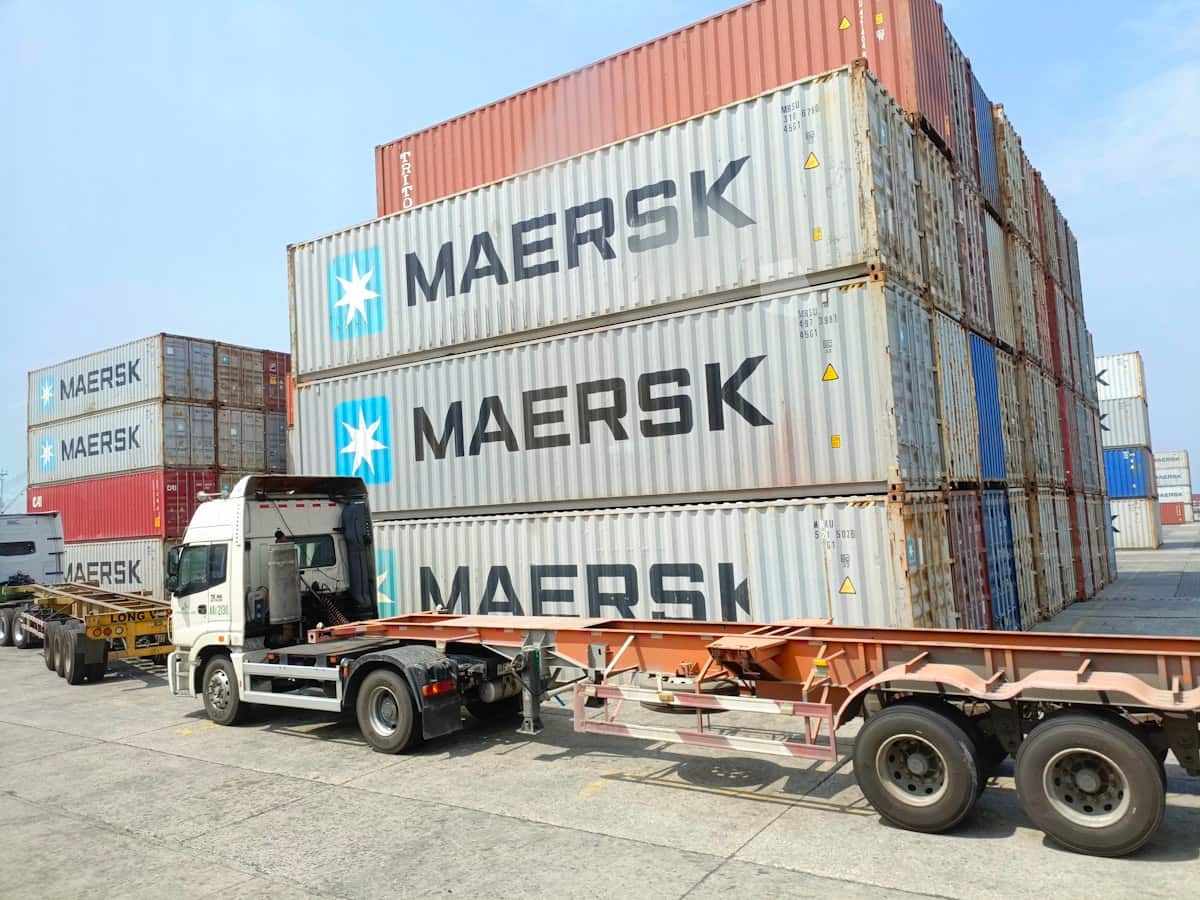
One tractor, one box, one clock. The clock is the part software keeps forgetting.
The platform
Thirty-three modules. Not seven subscriptions.
One system on one database, so nothing is re-keyed and nothing disagrees with itself.
Compliance
Authority, insurance and W9 on a freshness clock.
- MC and DOT authority
- Insurance BIPD and cargo
- W9 on file
- Reviewer signature
- Re-check at thirty days
Reports
Nine tabs, one date range.
- Concentration
- Collections
- Margin by lane
- Demurrage watch
- Carrier risk
Integrations
Server-side only. Every call audited.
- FMCSA QCMobile
- DAT
- Truckstop
- Samsara
- Project44
Phase ten
Nothing is switched on by default.
Not live yetThis is the directory, not a claim that a connection exists today.
- Audited
Server-side only.
No credential reaches the client bundle. Every outbound call is written to the audit log, and simulated data is always labelled simulated.
FMCSA QCMobile
Carrier data
Reads authority, insurance and safety rating by docket number.
DAT
Load boards
Posts a load and returns the lane’s rate history.
Samsara
Tracking
Pulls tractor positions against the load’s stops.
Project44
Ocean tracking
Watches vessel and container milestones for the free-day clock.

Also in the directory
- Truckstop
- Loadmatch
- Ferry booking
- SAFER
- Highway
- RMIS
- Motive
- Geotab
- Google Maps
- PC Miler
- DocuSign
- Twilio SMS
- QuickBooks
- Stripe
Roles and permissions
Four kinds of trust.
The desk
Books the freight and answers for it moving.
- Sales Manager
- Transportation Manager
- Dispatch
- Tracking
The money
Bills it, chases it, and releases an advance.
- Finance Manager
- Accounts
The office
Sets the rules, approves carriers, reads everything.
- Owner
- General Manager
- Compliance Manager
- Compliance Team
- Viewer
Outside it
Sees their own file only. Everything they send is a proposal your staff accept.
- Customer portal
- Carrier portal
24 × 6
Modules by actions
The grid behind the four groups. Rows in your own database, editable per brokerage — a person may hold several roles, and their access is the union.
await requireAccess(module, action)
Every server action opens with this, before a row is read. Typing the URL reaches nothing either.
Pricing
Three shapes of brokerage.
Quoted on seats, load volume, integrations and deployment — after we have seen your book.
Desk
One office running its own book.
Pricing on a call
What’s included
- Load board and workspace
- Compliance gate and credit gate
- Itemized charges and invoicing
- Roles and the audit log
- Recommended
Terminal
Drayage with the money attached.
Pricing on a call
What’s included
- Everything in Desk
- Advance ledger and demurrage watch
- Customer and carrier portals
- Arrival notices and the report hub
Fleet
More than one entity, more than one office.
Pricing on a call
What’s included
- Everything in Terminal
- Multiple entities under one login
- Custom roles and single sign-on
- Commission runs and tenant backup
Running your own instance in your own region is Enterprise.
Compare all four tiersBefore you ask
The questions that come before a contract.
Ask the seventh one.
It is answered by a person who has read your file, not by a form.
Customers, carriers and loads import from CSV or XLSX with column mapping, so you map them rather than re-type them. Nothing commits until you have seen a validation preview, and an import applies completely or not at all.
On one server you control, running Postgres, object storage and the application in containers — self-hosting is the design constraint, not a deployment option. Every table carries an organisation id and Postgres row-level security enforces it inside the database, not only in a query somebody wrote in a hurry.
Because a general TMS has no field for the parts of a drayage move that cost money. The last free day is a date with a clock against it, and the advance you fronted the steamship line is a ledger entry the container cannot release without.
Your company profile, letterhead and people take an afternoon, and that is what makes the first document the system generates carry your docket rather than ours. Your own records set the real timeline: a customer list with three spellings of one consignee does not import in a single pass.
You can still build the load — the carrier is created in pending compliance and the compliance team is notified. What you cannot do is paper it, because dispatch documents refuse to generate until authority, insurance and W9 are on file and a reviewer has approved in writing.
Eleven roles ship as defaults over a grid of twenty-four modules by six actions, and that grid is yours to edit. A sales agent sees their own book only, enforced in the query layer on the server rather than by hiding a menu item.

What happens on the call
- You send one container number and one invoice beforehand.
- We load them live — your lane, your customer, your accessorials.
- We run the gates against a carrier you pick, and show you what refuses.
You keep the paperwork the system generates, whether or not you buy.